Artistic Patterns: Purposeful Abstraction for Today’s Creative Workflows
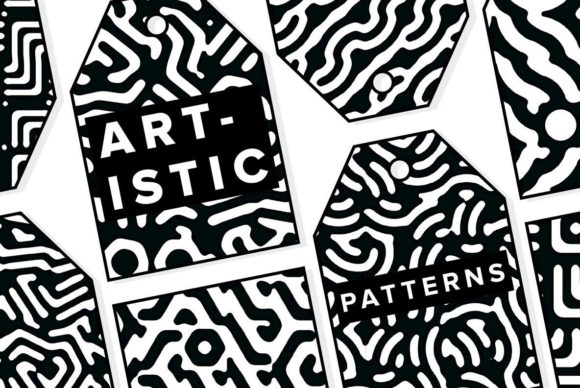
Artistic Patterns aren’t just decorative fillers—they’re functional design assets that respond to how creators actually work now. This curated pack of 62 abstract backgrounds reflects a quiet but meaningful shift: away from generic textures and toward intentional, versatile visual language. Each background is delivered at 3000×3000px in high-resolution JPG format—large enough to scale across digital and print contexts without compromise, yet optimized for quick integration into real-world projects.
Why Abstract Backgrounds Are Gaining Ground—Without the Noise
Designers and marketers no longer default to stock photos or gradient overlays when establishing tone. Instead, they’re turning to abstract compositions—especially black and white ones—for their neutrality, adaptability, and emotional resonance. Unlike photorealistic assets, artistic patterns don’t compete with foreground content. They support hierarchy rather than disrupt it. A clean product mockup, a minimalist presentation slide, or a thoughtful blog header gains clarity—not distraction—when anchored by an abstract shape or rhythmic line structure.
This isn’t about chasing aesthetics alone. It’s about efficiency. With tighter deadlines, broader platform requirements (web, social, email, print), and increasing demand for brand consistency, creators need assets that behave predictably. These 62 backgrounds are built for that reality: consistent resolution, neutral contrast, and deliberate composition mean less time adjusting brightness, cropping, or converting color modes—and more time refining messaging or user experience.
From Trend to Tool: How Artistic Patterns Fit Modern Creative Practice
Consider the typical workflow of a freelance graphic designer preparing a client’s new packaging line. They need to show how a logo sits against texture, how typography breathes over surface, how color interacts with tone. Using a low-res or overly busy background muddies feedback. But a high-fidelity, monochrome abstract background—like those in this pack—gives stakeholders clear visual context without biasing perception toward a specific palette or mood. It becomes a neutral stage, not a competing actor.
Similarly, educators building online course materials benefit from subtle, non-distracting backdrops behind infographics or key takeaways. Bloggers embedding quotes or pull-outs find that a soft geometric pattern adds visual interest while preserving readability—far more effectively than a blurred photo or repeating icon. Even small business owners designing Instagram carousels report improved engagement when using understated artistic patterns instead of solid colors: the added depth encourages pause, without demanding attention.
Black and White as a Strategic Choice—Not Just a Style
The emphasis on black and white design in this collection is deliberate—and increasingly practical. Monochrome backgrounds eliminate color-clashing risks during rapid prototyping. They work seamlessly with any brand palette, whether muted earth tones or vibrant neons. And because they avoid chromatic complexity, they render consistently across devices and browsers—no unexpected shifts in saturation or contrast on mobile screens or older monitors.
More importantly, black and white abstraction supports accessibility by default. High-contrast, non-repetitive compositions reduce visual fatigue and avoid triggering patterns known to affect users with photosensitive conditions. That doesn’t mean every background is stark or severe—many balance density and negative space thoughtfully—but it does mean each one prioritizes function alongside form.
Real Use Cases, Not Hypotheticals
- Product mockups: Apply a textured abstract background behind a smartphone case or ceramic mug to suggest materiality and context—without implying a specific environment or lifestyle.
- Presentation decks: Replace flat slide backgrounds with layered organic shapes to reinforce themes like growth, connection, or innovation—without needing custom illustration.
- Social media banners: Scale a single background across multiple platforms (LinkedIn, X, Pinterest) knowing the 3000×3000px size accommodates varied aspect ratios with minimal cropping.
- Email headers: Use a low-contrast, tonal pattern to add sophistication to a newsletter while maintaining fast load times—JPG compression here is balanced, not compromised.
What Has Changed—and Why Now?
Fifteen years ago, “abstract background” often meant blurry bokeh, overused fractals, or pixelated noise. Today’s expectations are sharper. Designers expect precision in scale, intentionality in rhythm, and restraint in contrast. Tools have evolved—Figma auto-layouts, Canva’s resizing logic, Adobe Express templates—all assume assets will behave cleanly across contexts. A poorly constructed background breaks flows; a well-built one disappears into the workflow, doing its job silently.
That evolution mirrors broader shifts: remote collaboration demands clarity over cleverness; algorithm-driven feeds reward visual cohesion over novelty; and audiences—increasingly design-literate—notice when a background feels arbitrary versus aligned. Artistic Patterns responds to that expectation not with volume alone, but with cohesion. The 62 pieces weren’t assembled randomly. They share a common resolution, a shared tonal range, and a consistent level of detail—making them interoperable, not just interchangeable.
Practical Integration—No Plugins, No Hassle
These backgrounds require no special software or licensing gymnastics. JPG format means immediate compatibility with Photoshop, Affinity Photo, Figma, Canva, PowerPoint, Keynote—even basic web builders like Squarespace or Webflow. There’s no need to convert, resize, or adjust ICC profiles. At 3000×3000px, they comfortably cover full-screen web headers (often 1920×1080 or smaller), print-ready brochures (300 DPI at 10×10 inches), and high-res presentations alike.
For teams, that consistency matters. A marketing manager can share the pack with a junior designer and a copywriter—knowing both will open files without error messages or missing fonts. For solopreneurs, it eliminates the friction of hunting across ten different sites for “just one more” usable texture. Everything lives in one predictable, well-organized set.
Looking Ahead—Without Overpromising
Will abstract backgrounds replace photography? No. Will monochrome design dominate all branding? Unlikely. But what’s clear is that tools like this pack reflect a maturing creative ecosystem—one where asset quality is measured not just by resolution, but by reliability, inclusivity, and real-world fit. As AI-generated visuals grow more accessible, human-curated collections gain new value: not for novelty, but for nuance. These 62 artistic patterns offer variation without chaos, structure without rigidity, and abstraction with purpose.
They won’t solve every design challenge—but they reliably solve several recurring ones. That’s the quiet utility of thoughtful Artistic Patterns: not flash, but foundation.