Free Vintage Glitch Seamless Patterns: A Creative Designer’s Essential Resource
Whether you're crafting a retro-futuristic album cover, designing a bold website background, or adding texture to a print layout, vintage glitch seamless patterns offer a uniquely expressive visual language. This free set of high-quality, ready-to-use patterns bridges nostalgia and digital experimentation—giving designers, educators, students, and hobbyists instant access to professional-grade textures without cost or complexity.
What Exactly Are Seamless Patterns?
A seamless pattern is a tileable image that repeats infinitely in all directions without visible edges, gaps, or misalignments. Think of wallpaper—you don’t see where one repeat ends and the next begins. That’s the power of seamless tiling: it creates smooth, scalable backgrounds ideal for web design, branding, packaging, textile mockups, and digital art.
Unlike standard images, seamless patterns are engineered with precise edge alignment. Each pixel on the top row matches the bottom, and each pixel on the left aligns with the right—ensuring flawless repetition at any scale.
Why 12×12 Inches at 300 DPI Matters
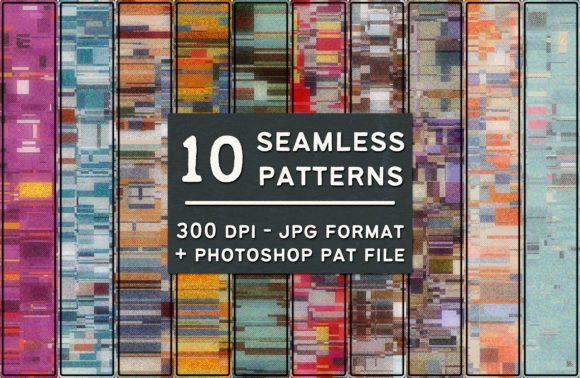
This collection delivers each pattern in two optimized formats:
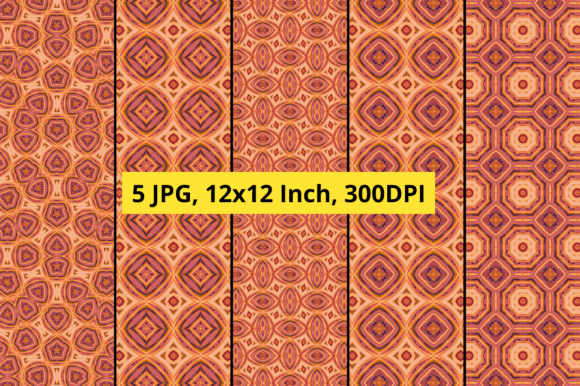
- JPG files sized at 12 inches × 12 inches and rendered at 300 dots per inch (DPI)—the industry standard for high-resolution print output. Whether you’re preparing a poster, business card, or fabric swatch, these dimensions ensure crisp detail even when enlarged or printed at full size.
- Photoshop .pat files, pre-formatted for immediate use in Adobe Photoshop. Just load them into your Swatches panel and apply with a single click—no manual tiling, no layer blending, no guesswork.
That dual-format approach makes these patterns equally powerful for print professionals needing fidelity and digital creators prioritizing speed and flexibility.
The Allure of Vintage Glitch Aesthetics
“Glitch” isn’t just broken pixels—it’s an intentional aesthetic rooted in digital imperfection: scan lines, color channel shifts, data corruption artifacts, CRT distortion, and analog noise. When fused with vintage sensibilities—think VHS static, early web textures, 90s desktop wallpapers, or photocopier halftones—the result is richly layered, emotionally resonant design language.
These patterns aren’t random noise. Each one is thoughtfully composed to evoke specific moods:
- A soft scan-line overlay adds subtle motion and depth to flat UI elements.
- A halftone grid with chromatic aberration lends authenticity to retro branding or zine layouts.
- A low-res pixel mosaic can ground modern illustrations in tactile, human-made charm.
In practice, vintage glitch patterns help break visual monotony—adding texture without overwhelming content. They’re especially effective in editorial design, music marketing, indie game assets, and social media visuals where personality and distinction matter.
Who Benefits—and How?
You don’t need to be a Photoshop expert—or even a professional designer—to benefit from this resource. Here’s how different users apply seamless vintage glitch patterns in real-world contexts:
Students & Educators
Design and media arts students use these patterns to explore texture theory, color interaction, and digital composition fundamentals. Instructors incorporate them into assignments on visual storytelling, branding identity, or digital preservation—sparking conversations about how technology shapes cultural memory.
Small Business Owners & Marketers
Creating consistent brand assets on a budget? These patterns serve as instant backgrounds for email headers, Instagram story templates, presentation decks, or printable promo materials. Because they’re seamless and high-res, they scale cleanly across platforms—from mobile screens to trade show banners.
Web & UI Designers
While CSS background-repeat handles tiling, using pre-rendered JPGs gives you full control over grain, contrast, and mood—without relying on browser-based filters. Apply them as subtle underlays behind text blocks or as animated overlays (via GIF or Lottie) for interactive experiences.
Hobbyists & Makers
From laser-cut greeting cards to sublimation-printed tote bags, crafters use seamless patterns to add signature texture to physical projects. Load the .pat file into Photoshop, create a custom brush, or export as SVG for vector-based cutting software.
Dispelling Common Misconceptions
Before diving in, it helps to clarify what these patterns *aren’t*—and why that matters:
- They’re not low-quality “freebie” graphics. At 300 DPI and 12×12”, they meet commercial print standards—not just screen display specs.
- They’re not “just noise.” Each pattern balances randomness with rhythm, ensuring visual cohesion rather than visual fatigue.
- They’re not limited to “retro” projects. Paired with minimalist typography or sleek gradients, glitch textures create compelling juxtapositions—making them surprisingly versatile in contemporary design.
- You don’t need expensive software to use them. While the .pat format is Photoshop-native, the JPGs work in any image editor—including free tools like GIMP, Photopea, or Canva (via upload + repeat settings).
Getting Started: Simple Integration Tips
Here’s how to start using these patterns in under five minutes:
- Download the ZIP folder containing both JPG and .pat files.
- For Photoshop: Go to Edit > Presets > Preset Manager, select “Patterns,” then click “Load” and choose the .pat file. Your new patterns appear instantly in the Swatches panel.
- For other editors: Open the JPG, copy it, and use your software’s “pattern fill” or “tile layer” function—or simply duplicate and align manually (though the seamless design means alignment is virtually automatic).
- For web use: Upload the JPG to your site’s assets folder and apply via CSS:
background-image: url('vintage-glitch-01.jpg'); background-repeat: repeat; - Experiment freely: Try adjusting blend modes (Multiply, Overlay, Soft Light), lowering opacity, or layering multiple patterns for complex depth.
Why Free Resources Like This Matter
In today’s creative economy, access shouldn’t be gatekept. High-quality, ethically sourced, attribution-free assets lower barriers to entry—empowering learners, non-profits, indie developers, and emerging artists to produce polished work without licensing overhead or technical debt.
This set reflects a broader shift toward open creative infrastructure: tools, templates, and textures designed not just for utility—but for inspiration, education, and community growth. It’s part of a growing ecosystem where generosity fuels innovation.
Expand Your Toolkit—Explore More
This free vintage glitch pattern pack is just the beginning. Visit our shop to discover additional seamless tiling patterns—including geometric grids, organic watercolor textures, abstract ink bleeds, and seasonal-themed collections—all crafted with the same attention to resolution, usability, and creative intent.
We also offer free downloads beyond patterns: editable mockup templates, font pairings guides, and beginner-friendly Photoshop action sets—designed to help you build confidence, consistency, and creative momentum.
Final Thought: Texture Tells a Story
In a world saturated with ultra-smooth, algorithmically perfected visuals, texture reintroduces humanity. A vintage glitch pattern doesn’t hide its origins—it celebrates them. It whispers of analog warmth amid digital precision, of error transformed into expression, of history informing tomorrow’s design language.
So whether you’re reviving a forgotten brand voice, grounding a speculative tech concept in tangible feeling, or simply making your portfolio stand out—these patterns are more than decoration. They’re quiet collaborators in your creative process.
Download, experiment, iterate—and most importantly, make something only you could make.